
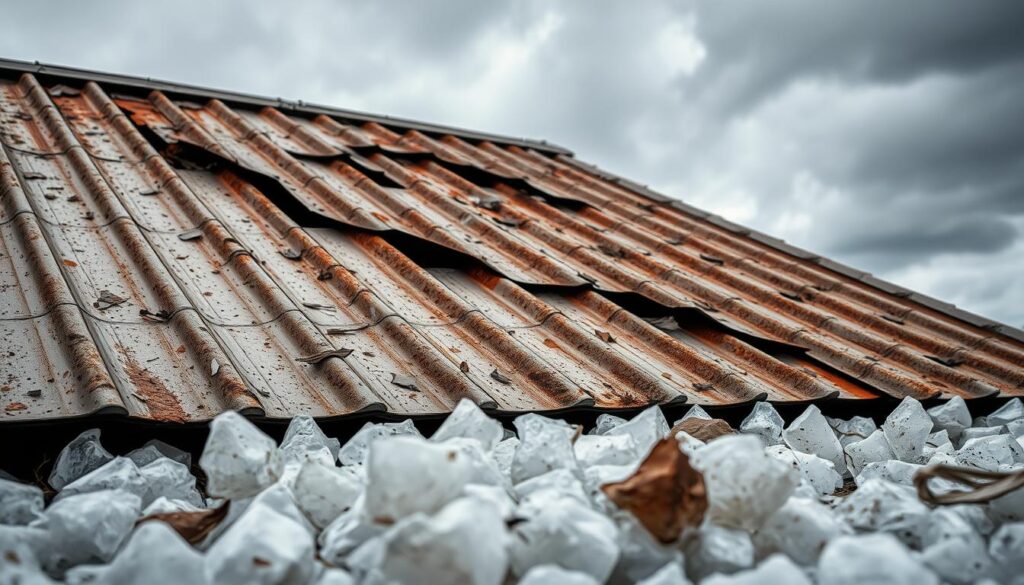
As a homeowner with a metal roof, you’re likely concerned about the potential impact of hail damage. Most insurance policies cover hail damage to metal roofs, but the extent of coverage depends on your specific policy and the severity of the damage.
Understanding your insurance policy’s coverage for metal roof hail damage is crucial before filing a claim. The fundamental premise of an insurance claim is that your roof was damaged, not that it’s old or aesthetically displeasing.
Key Takeaways
- Most insurance policies cover hail damage to metal roofs, but coverage varies between providers and policies.
- Understanding your policy’s specific coverage is crucial before filing a claim.
- Insurance companies replace roofs due to damage that can lead to water leaks and interior home damage.
- Different insurers interpret “damage” to metal roofs differently.
- A comprehensive understanding of metal roof vulnerability to hail is necessary for making informed decisions.
Understanding Metal Roof Vulnerability to Hail
Understanding how hail affects metal roofs is crucial for homeowners in hail-prone areas. Hail can cause significant damage to metal roofs, but the extent of the damage depends on several factors.
The type of metal roofing material, its thickness, and the size of the hailstones all play critical roles in determining the vulnerability of a metal roof to hail damage.
Types of Metal Roofing Materials and Their Durability
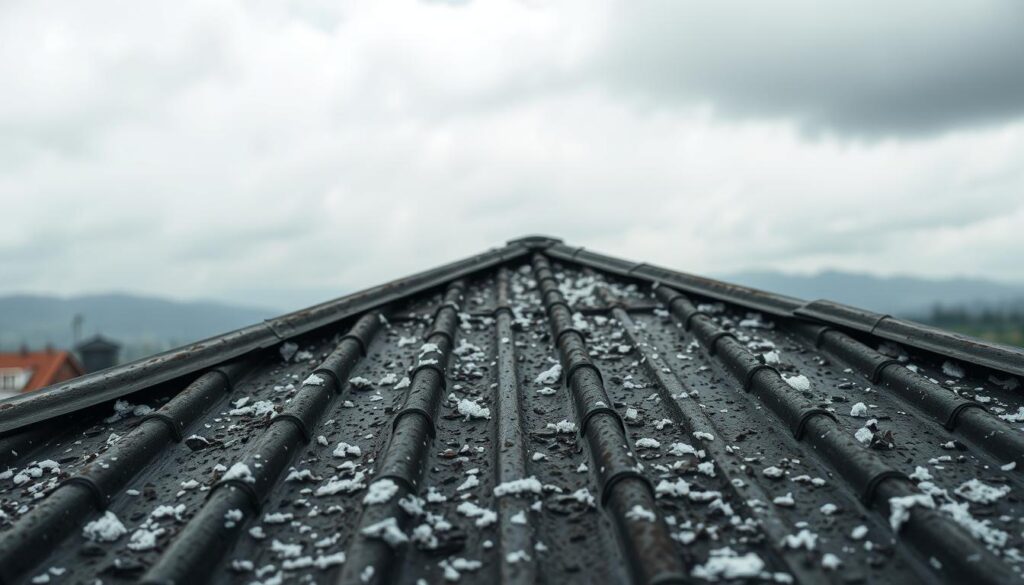
Different metal roofing materials offer varying levels of durability against hail. Common materials include aluminum, steel, and copper, each with its own strengths. Thicker materials generally provide better resistance to hail damage metal roofs.
How Hail Size and Metal Thickness Affect Damage
Hail size and metal thickness are critical factors in determining the extent of damage metal roof. Larger hailstones cause more damage, while thicker metals are more resistant to dents and punctures. Understanding these factors helps in assessing the risk to your damage metal roofs.
Common Types of Hail Damage to Metal Roofs
Hail damage to metal roofs can manifest in various forms, ranging from cosmetic issues to structural problems. Understanding these different types of damage is crucial for assessing the integrity of your roof after a hailstorm.
Cosmetic Damage: Dents and Dings
Cosmetic damage, such as dents and dings, is the most visible form of hail damage. These imperfections can affect the appearance of your metal roof but typically do not compromise its functionality. However, it’s essential to monitor these cosmetic issues, as they can potentially lead to more significant problems if not addressed.
Structural Damage: Punctures and Leaks
Structural damage, including punctures and leaks, is more severe and can lead to water infiltration. The presence of leaks is a significant signs of hail damage, indicating that the roof’s integrity has been compromised. If you notice signs hail damage such as water stains or damp insulation, it’s crucial to investigate further to prevent additional damage.
Will Insurance Pay for Hail Damage to Metal Roof?
When hail damages your metal roof, understanding your insurance coverage is crucial. Homeowners often wonder if their insurance policy will cover the cost of repairs or replacement.
Standard Coverage in Homeowners Insurance Policies
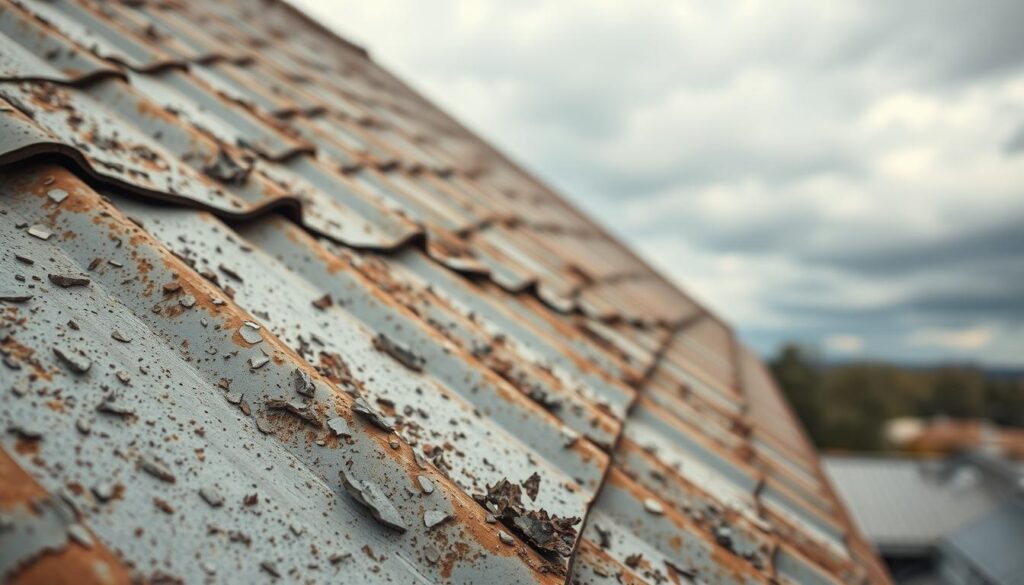
Typically, homeowners insurance policies cover damage to roofs caused by hail. The extent of coverage depends on the policy terms, including the type of damage and the age of the roof. You should review your policy to understand what is covered and what is not.
Policy Limitations and Exclusions
Some policies exclude cosmetic damage, meaning dents that don’t affect the roof’s functionality may not be covered. In hail-prone areas, insurers may limit coverage for older roofs. Understanding these limitations is key to knowing what to expect when filing a claim. Insurance companies may offer endorsements to cover cosmetic damage, which can be valuable for metal roofs.
- Many policies contain exclusions for cosmetic damage, which may not be covered if it doesn’t affect the roof’s functionality.
- Maintenance-related exclusions can complicate insurance claims if the insurer determines the damage resulted from pre-existing conditions or improper installation.
- Time limitations for filing claims are critical, typically requiring notification within 30-60 days after hail damage occurs.
Understanding Cosmetic Damage Exclusions
The distinction between cosmetic and functional damage plays a significant role in determining insurance payouts for metal roof hail damage. Cosmetic damage refers to aesthetic issues that do not affect the functionality of the roof, while functional damage impacts the roof’s performance.
What Qualifies as “Cosmetic” vs. “Functional” Damage
Cosmetic damage includes dents, dings, and other visible imperfections that do not compromise the roof’s integrity. On the other hand, functional damage involves issues like punctures or leaks that affect the roof’s ability to protect the home.
How Cosmetic Waivers Affect Your Coverage
Cosmetic damage waivers are additions to insurance policies that reduce coverage for aesthetic damage. When you accept such a waiver, you typically receive a premium discount. However, this shifts the burden to you to prove that damage is functional, not just cosmetic.
- Cosmetic waivers can significantly reduce insurance payouts for metal roofs.
- Some insurance companies, like Texas Farm Bureau, may replace metal roofs with visible hail damage if there’s no cosmetic waiver.
- The interpretation of cosmetic waivers varies between insurance companies.
src=”https://seowriting.ai/32_6.png” alt=”metal roofs”>
Filing an Insurance Claim for Metal Roof Hail Damage
If your metal roof has been damaged by hail, navigating the insurance claims process is crucial for getting the necessary repairs covered. The process involves several steps that you should be aware of to ensure a smooth experience.
Documenting the Damage Properly
To file a claim effectively, you need to document the damage properly. Take clear photos of the damage from multiple angles. This visual evidence will be crucial for your insurance company.
Working with Insurance Adjusters
After filing your claim, an insurance adjuster will assess the damage. Be present during the assessment to point out all the damage. This ensures that the adjuster’s report is accurate.
Appealing a Denied Claim
If your claim is denied, don’t hesitate to appeal. Request a detailed explanation of the denial and gather additional evidence to support your appeal. This might include getting an independent assessment or comparing your claim to similar ones that were approved.

| Claim Status | Action Required | Timeline |
|---|---|---|
| Claim Filed | Wait for adjuster’s assessment | Within 1-2 weeks |
| Claim Denied | Appeal with additional evidence | Within 30 days |
| Claim Approved | Receive payout for repairs | Within 2-4 weeks |
When to Repair vs. Replace a Hail-Damaged Metal Roof
The decision to repair or replace a hail-damaged metal roof depends on several key factors. Understanding these factors is crucial to making an informed decision that aligns with your budget and long-term needs.
Evaluating the Extent of Damage
Minor dents or a few damaged panels can often be fixed, but significant damage may require a complete replacement. The extent of the damage is a critical factor in this decision. If more than 30% of the roof is damaged, replacement is usually recommended.
Key considerations include:
- The age of the roof
- The quality of the roofing materials
- The cost of repairs versus replacement
Cost Considerations and Insurance Payouts
Insurance payouts for metal roof hail damage vary based on the policy type. Replacement Cost Value (RCV) policies cover new roof costs minus your deductible, while Actual Cash Value (ACV) policies deduct depreciation.
| Policy Type | Coverage | Deductible Consideration |
|---|---|---|
| RCV | Covers new roof costs | Minus deductible |
| ACV | Deducts depreciation | Potential out-of-pocket expenses |
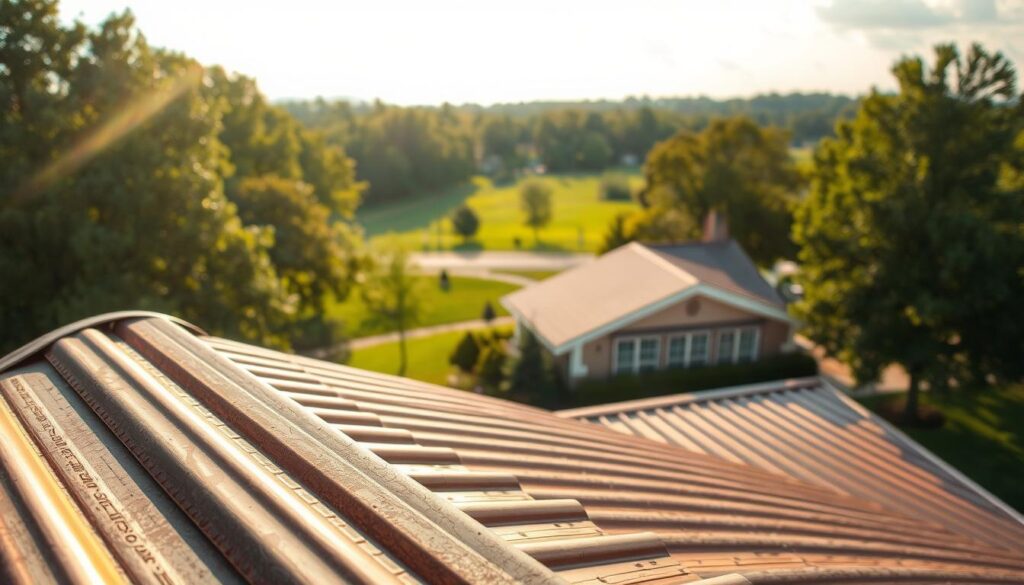
When deciding between repair and replacement, consider the cost differential and long-term implications. Partial repairs may save money initially but could lead to future problems. The cost of metal roof replacement typically ranges from $10-$15 per square foot, depending on material quality.
Conclusion
When hail damage affects your metal roof, it’s essential to comprehend the nuances of your insurance policy. Regular maintenance is key to preventing further damage; clean your gutters and remove debris at least twice a year to prevent water buildup.
Consider upgrading to impact-resistant metal roofing to minimize future hail damage risk. This proactive step may lower your homeowner’s insurance premiums in the long run. Understanding the distinction between cosmetic and functional damage is crucial when dealing with hail damage claims.
To ensure fair compensation, it’s vital to document the damage properly and work with insurance adjusters. Consulting with roofing professionals and insurance specialists will help you navigate the complex claims process and achieve the best outcome for your metal roof repair or replacement.
FAQ
What types of metal roofing materials are most resistant to hail damage?
Materials like steel, aluminum, and copper are known for their durability. However, the thickness and coating of the metal also play a significant role in determining its resistance to hail damage.
How does the size of hailstones affect metal roof damage?
Larger hailstones can cause more significant damage, including dents, dings, and punctures. The size and velocity of the hailstones determine the extent of the damage to your metal roof.
Does homeowners insurance typically cover hail damage to metal roofs?
Most standard homeowners insurance policies cover hail damage. However, the extent of the coverage depends on the policy’s terms, including any limitations or exclusions related to cosmetic damage.
What is considered cosmetic damage to a metal roof?
Cosmetic damage refers to dents, dings, or other forms of damage that do not affect the functionality of the roof. Insurance policies may have different approaches to handling cosmetic damage.
How do I document hail damage to my metal roof for an insurance claim?
Take clear photos of the damage from multiple angles, and consider hiring a professional to inspect your roof. Keeping a detailed record of the damage will help when filing your claim.
What should I expect when working with insurance adjusters to assess hail damage?
Insurance adjusters will inspect your roof to determine the extent of the damage. Be present during the inspection to ensure all damage is documented, and ask questions about their assessment.
How do I determine whether to repair or replace my hail-damaged metal roof?
The decision to repair or replace depends on the extent of the damage and the cost considerations. Your insurance payout and the roof’s age will also influence this decision.
Can I appeal if my insurance claim for hail damage is denied?
Yes, you can appeal a denied claim. Review your policy to understand the reasons for the denial, and gather additional evidence to support your claim before submitting an appeal.