

When a root canal procedure fails to heal or a new infection develops in a previously treated tooth, retreatment becomes necessary. Understanding the associated costs is crucial, especially when navigating insurance coverage.
The success rate of this procedure is high, with an 88.42% success rate according to the Journal of Endodontics. The cost will depend on the complexity of the treatment and the number of canals involved.
Premolars and molars, which have multiple canals, may require more complex treatment, affecting the overall cost.
Key Takeaways
- Root canal retreatment is necessary when the initial procedure fails or a new infection develops.
- The success rate of root canal retreatment is 88.42%.
- The cost of retreatment varies based on the complexity of the procedure.
- Understanding insurance coverage is crucial for managing retreatment costs.
- Premolars and molars with multiple canals may increase treatment costs.
Understanding Root Canal Retreatment
Understanding the need for root canal retreatment can help you address complications that arise after the initial root canal treatment. Root canal retreatment is a procedure that may be necessary when the initial treatment fails to resolve the issue or when new problems develop.
What is Root Canal Retreatment?
Root canal retreatment is a dental procedure designed to readdress the tooth that has been previously treated with a root canal. The goal is to remove the source of infection or address new issues that have arisen. This procedure involves re-cleaning and re-filling the root canal to ensure the tooth is properly treated.

Why Root Canal Retreatment Becomes Necessary
Several factors can necessitate root canal retreatment. These include:
- Delayed crown placement, allowing bacteria to enter the tooth
- Complex root anatomy that makes it difficult to clean all canals thoroughly during the initial treatment
- New decay under the restoration, potentially leading to fresh infection
- Damaged restorations, such as cracked crowns or deteriorated fillings, allowing bacteria to re-enter
- Physical damage to the tooth, creating pathways for new infections
- Salivary contamination if the restoration doesn’t completely seal the tooth
These issues highlight the importance of proper aftercare and regular dental check-ups to prevent the need for retreatment.
The Root Canal Retreatment Procedure

If your tooth remains painful or infected after a root canal, you may need a root canal retreatment. This procedure is designed to address issues that arise after an initial root canal treatment. The root canal retreatment procedure is more complex than the initial treatment because it involves working through or around existing restorative materials.
Steps Involved in Retreatment
The retreatment process involves several key steps. First, the endodontist must remove the existing filling material from the root canal. This is followed by a thorough cleaning and shaping of the canals to ensure they are free from infection. The tooth is then filled with new material to prevent further infection.
The procedure typically takes about 90 minutes, although the time may vary depending on the complexity of the case and the tooth involved.
Differences from Initial Root Canal Treatment
Root canal retreatment differs from the initial root canal treatment in several ways. The retreatment procedure is generally longer due to the additional steps required to remove previous filling materials. It also requires more specialized equipment and techniques to navigate complex canal systems. While the initial treatment focuses on removing infected pulp, retreatment addresses both the original issue and any new problems that have developed.
Root Canal Retreatment Cost with Insurance
When considering root canal retreatment, it’s essential to understand how insurance coverage plays a role. The financial aspect of this dental procedure can be complex, involving various factors including the type of insurance plan you have.
Average Cost Breakdown by Tooth Type
The cost of root canal retreatment varies based on the tooth type due to differences in complexity and the expertise required. Generally, the cost can range widely, but with insurance, the out-of-pocket expenses can be significantly reduced.
| Tooth Type | Average Cost Without Insurance | Average Insurance Coverage | Average Out-of-Pocket Cost |
|---|---|---|---|
| Front Tooth | $500-$800 | 50%-80% | $100-$400 |
| Premolar | $600-$1,000 | 50%-80% | $120-$500 |
| Molar | $800-$1,200 | 50%-80% | $160-$600 |
What Insurance Typically Covers
Most dental insurance plans categorize root canal retreatment as a major procedure. Typically, these plans cover between 50% to 80% of the cost after the deductible has been met. However, the extent of coverage can vary significantly between different insurance plans.
- Insurance coverage for retreatment varies, with some plans limiting how frequently they’ll cover endodontic procedures on the same tooth.
- Many plans have annual maximums that limit the total amount they’ll pay for all dental procedures within a calendar year.
- Some insurance policies may require pre-authorization for root canal retreatment.
It’s crucial to verify your specific coverage details with both your dentist and insurance company before proceeding with retreatment to avoid unexpected costs.

Factors Affecting Root Canal Retreatment Costs
Understanding the factors that affect root canal retreatment costs is crucial for patients. The total expense can be influenced by various elements, making it essential to break down these components to get a clear picture of what to expect.
Tooth Location and Complexity
The location and complexity of the tooth requiring retreatment play a significant role in determining the cost. Teeth that are harder to access, such as molars, typically require more time and expertise, increasing the cost. The complexity of the root canal anatomy can also affect the procedure’s difficulty and, consequently, its price.
Provider Expertise and Location
The expertise of the dental provider and their location can significantly impact the cost. Specialists like endodontists, who have advanced training in root canal treatments, may charge more than general dentists. Additionally, dental practices in urban areas or regions with a higher cost of living may have higher prices.
Additional Procedures Required
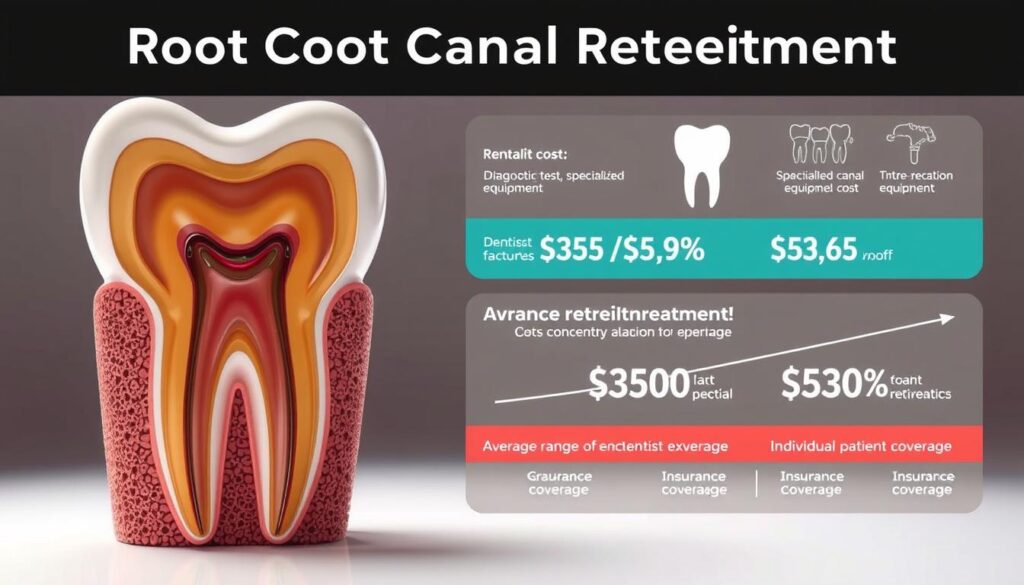
Root canal retreatment often necessitates additional procedures, which can substantially increase the overall cost. These may include diagnostic tests like specialized x-rays or cone beam CT scans, core build-ups to support a new crown, and the crown itself. The type of material chosen for the crown also affects the final cost.
| Procedure | Average Cost |
|---|---|
| Core Build-up | $303 |
| Ceramic Crown | $1,361 |
| Metal Ceramic Crown | $1,010 |
By understanding these factors, you can better estimate the total cost of your root canal retreatment and make informed decisions about your care.
Navigating Dental Insurance for Retreatment

Navigating dental insurance for root canal retreatment can be complex, but it’s essential for managing costs. Understanding the intricacies of your dental insurance plan is crucial to determining the extent of your coverage.
In-Network vs. Out-of-Network Coverage
One crucial aspect to consider is whether your dentist is in-network or out-of-network. In-network dentists have a contract with your insurance company, typically resulting in lower out-of-pocket costs for you. Out-of-network dentists do not have such a contract, which may lead to higher costs or even no coverage at all.
Understanding Deductibles and Co-payments
Deductibles and co-payments are key components of your dental insurance plan. Your deductible is the amount you must pay before your insurance kicks in, while co-payments are the costs you pay for each service after meeting the deductible. Understanding these costs helps you plan your expenses.
Coverage Limitations and Maximums
Dental insurance plans often have limitations, including annual maximums and frequency limitations. Annual maximums cap the total amount your insurer will pay for dental care within a year. Frequency limitations might restrict the number of times you can have a procedure like root canal retreatment within a certain timeframe.
Some key limitations include:
- Annual maximums typically range from $1,000 to $2,000.
- Frequency limitations may restrict retreatment to once every 2-5 years per tooth.
- Waiting periods for major procedures like retreatment can range from 6-12 months.
Alternatives to Root Canal Retreatment
There are several alternatives to root canal retreatment that patients can consider based on their dental needs. When the tooth is beyond repair, extraction followed by replacement options becomes a consideration.
Tooth Extraction and Replacement Options
Tooth extraction is a straightforward procedure that can address the problematic tooth. The cost of extraction varies between $75 and $200, depending on the complexity of the procedure. Following extraction, replacement options include dental implants, dental bridges, and removable partial dentures.
Dental implants offer a natural replacement solution, with costs ranging from $3,000 to $6,000 per tooth. Dental bridges, costing between $2,000 and $5,000 for a three-unit bridge, provide a middle ground. Removable partial dentures are the least expensive option, costing $1,000 to $2,500.
Cost Comparison: Retreatment vs. Alternatives
When comparing costs, root canal retreatment typically ranges from $750 to $2,400. While extraction is initially less expensive, the total cost with replacement can be substantially higher. Dental implants, while providing a natural solution, are significantly more expensive than retreatment. Insurance coverage varies, with retreatment generally receiving better coverage than implants.
Considering the cost, time investment, and biological cost, retreatment often proves more economical and less invasive than extraction and replacement. Patients should weigh these factors when deciding on a treatment plan.
Maximizing Your Insurance Benefits
Understanding the nuances of your dental insurance can significantly impact your out-of-pocket costs for root canal retreatment. To make the most of your coverage, it’s essential to be proactive and informed.
Questions to Ask Your Insurance Provider
Before undergoing root canal retreatment, it’s crucial to clarify your insurance coverage. Ask your provider about the extent of your coverage, including any deductibles, co-payments, and annual maximums. Inquire if there are any specific requirements, such as pre-authorization or a waiting period. Understanding these details can help you plan your treatment and avoid unexpected expenses. Some key questions to ask include: what is covered under your plan, what are the out-of-pocket costs, and are there any limitations or exclusions?
- Understand the percentage of costs covered by your insurance for root canal retreatment.
- Clarify if there are any additional fees associated with the procedure.
- Determine if your insurance provider has a list of preferred dentists or endodontists.
Timing Your Treatment for Optimal Coverage
Strategic timing of your root canal retreatment can significantly maximize your insurance benefits and minimize out-of-pocket costs. If you’ve already met your annual deductible, scheduling your retreatment before the end of your benefit year can save you from paying a new deductible in the following year. Conversely, if you’ve already reached or nearly reached your annual maximum, consider delaying non-urgent treatment until the start of your new benefit year when your maximum resets.
Conclusion: Is Root Canal Retreatment Worth the Investment?
When considering root canal retreatment, the question of whether it’s worth the investment often arises. Root canal retreatment is a procedure that can save your natural tooth and eliminate pain and infection.
The benefits of root canal retreatment are numerous. It is generally more affordable and quicker than other dental treatments, and it provides a second chance to keep your natural tooth. Successful retreatment results in a functional tooth with no signs of pain, swelling, or discharge.
Some key advantages of root canal retreatment include:
- Preserving your natural tooth structure, which offers superior function, aesthetics, and comfort compared to artificial replacements.
- A high success rate of approximately 88.42%, making it a reliable option for addressing issues with previously treated teeth.
- The potential for reduced out-of-pocket costs when insurance coverage is applied.
- The psychological benefit of maintaining your original tooth, which many patients prefer.
Ultimately, the decision to pursue root canal retreatment should be made in consultation with your dentist or endodontist, considering the specific condition of your tooth, your overall oral health, and your personal preferences and financial situation. With modern treatment techniques and materials, root canal retreatment is a viable and effective solution for many patients.
FAQ
What is the average cost of a root canal procedure?
The average cost can range from 0 to
FAQ
What is the average cost of a root canal procedure?
The average cost can range from $300 to $1,500 or more, depending on the tooth type and dental insurance coverage.
Does dental insurance cover root canal procedures?
Most dental insurance plans cover a portion of the cost, but the extent of coverage varies depending on the plan and provider.
What factors affect the cost of root canal retreatment?
The cost is influenced by the tooth location, complexity of the procedure, provider expertise, and additional procedures required, such as a crown.
Is root canal retreatment more expensive than the initial treatment?
Generally, retreatment is more complex and may be more expensive due to the additional procedures required to address the underlying issues.
Can I expect pain during or after the procedure?
Your dental provider will work to minimize discomfort during the procedure. Some pain or sensitivity may occur after the treatment, but this is typically manageable.
How do I maximize my insurance benefits for root canal retreatment?
Understand your insurance plan, ask questions about coverage, and time your treatment to optimize your benefits.
Are there alternatives to root canal retreatment?
Yes, tooth extraction and replacement with dental implants or other options may be considered, but these alternatives have their own costs and implications.
How does the provider’s expertise impact the cost and outcome?
An endodontist or experienced dental provider may charge more, but their expertise can lead to a more successful outcome and potentially reduce the need for future procedures.
,500 or more, depending on the tooth type and dental insurance coverage.
Does dental insurance cover root canal procedures?
Most dental insurance plans cover a portion of the cost, but the extent of coverage varies depending on the plan and provider.
What factors affect the cost of root canal retreatment?
The cost is influenced by the tooth location, complexity of the procedure, provider expertise, and additional procedures required, such as a crown.
Is root canal retreatment more expensive than the initial treatment?
Generally, retreatment is more complex and may be more expensive due to the additional procedures required to address the underlying issues.
Can I expect pain during or after the procedure?
Your dental provider will work to minimize discomfort during the procedure. Some pain or sensitivity may occur after the treatment, but this is typically manageable.
How do I maximize my insurance benefits for root canal retreatment?
Understand your insurance plan, ask questions about coverage, and time your treatment to optimize your benefits.
Are there alternatives to root canal retreatment?
Yes, tooth extraction and replacement with dental implants or other options may be considered, but these alternatives have their own costs and implications.
How does the provider’s expertise impact the cost and outcome?
An endodontist or experienced dental provider may charge more, but their expertise can lead to a more successful outcome and potentially reduce the need for future procedures.